
There are three reasons given by the IB for this question to be answered.
Role of the Communist party
Impact of stagnation and failed economic reform
Impact of Chernobyl
Impact of the Cold War: Detente, Afghanistan and SDI
Challenges to communism in Eastern Europe
Romania
Fall of the Berlin Wall
Poland and Solidarity
Lech Walesa was an important figure during the 1980s. He was a Communist trade union leader (called Solidarity) and was one of the leaders advocating for change in Poland. He came to prominence in 1980, gaining industrial workers some of the rights they sought. But then martial law was introduced in 1981 and Walesa was jailed for a year.
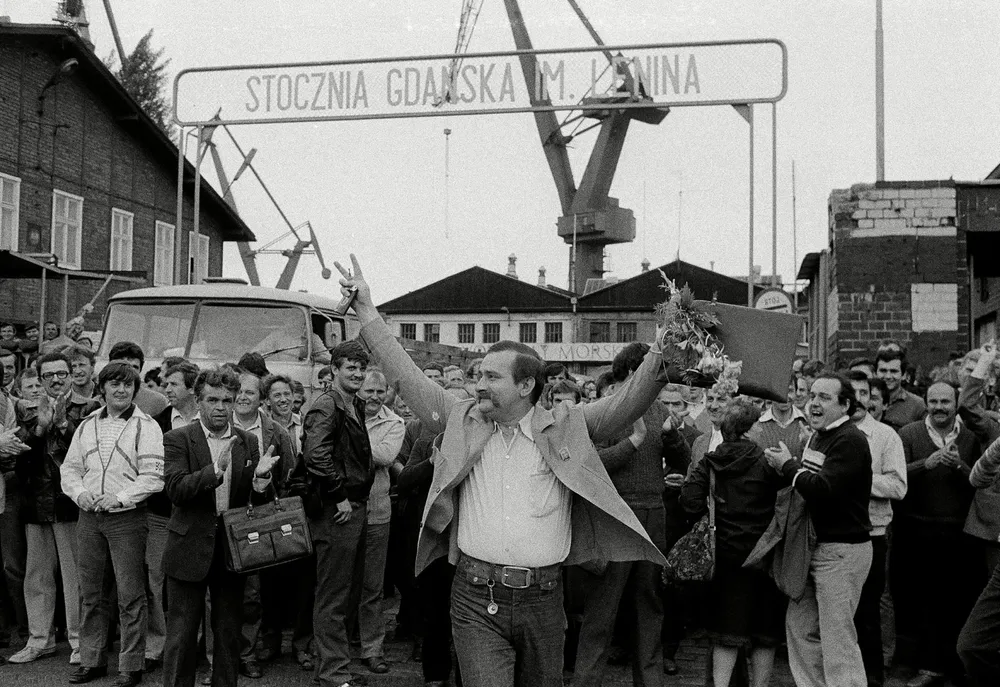
As a result of an economic crisis in 1988 (Poland had borrowed billions from the West in the 1970s but had not been able to pay it back) Solidarity became legal again and the free elections which took place in 1989 led to them winning a huge majority. Walesa eventually became Poland’s first president from 1990 to 1995.
What was the impact on the Soviet Union?
Arguably the events of 1988 and 1989 in Poland were a catalyst for what was to happen in the Soviet Union. It proved the end of the Brezhnev Doctrine (the Soviets would use military force if a Warsaw Pact nation was threatened). Arguably, the Sinatra Doctrine replaced it! Events in Poland may have influenced:
- Hungary tearing down their border with Austria (this began before the Polish elections but may have been influenced by the reinstatement of Solidarity).
- The fall of the Berlin Wall in November.
- Communist regimes in Prague, Sofia, and Bucharest fell in rapid succession.
- Independent movements in the Soviet Union then began to make progress, knowing that Moscow may not act to prevent them moving towards self-determination.