
Starter Activities
You do not need an in-depth knowledge of Japanese history for Paper One but it is both useful and interesting to understand something of its past before the Meiji Restoration.
A bit of fun to begin with…
Describe these images,
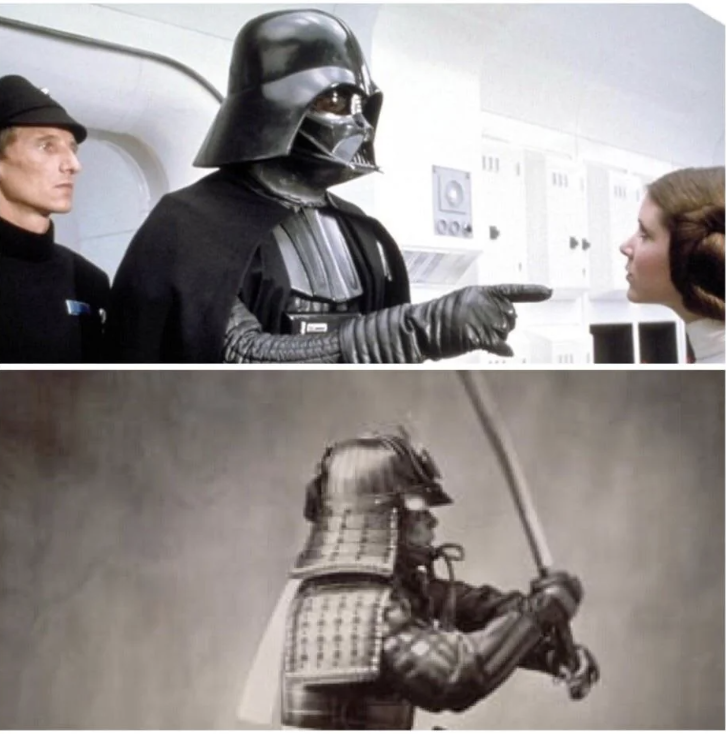
And these,
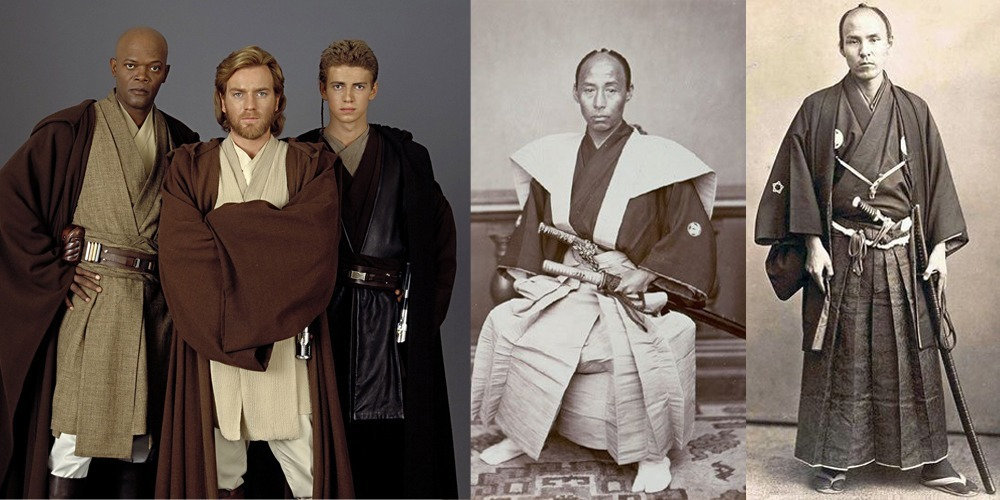
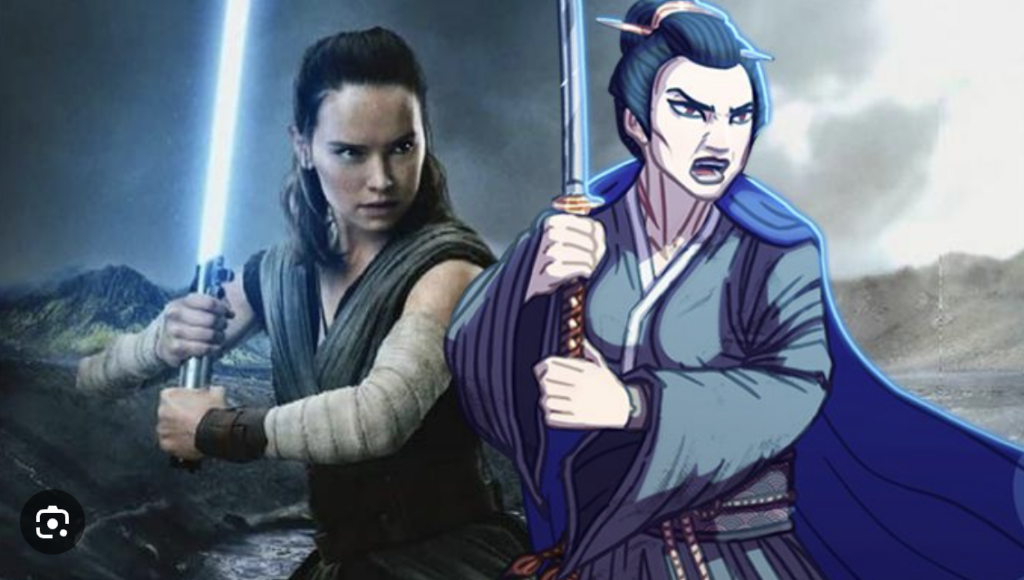
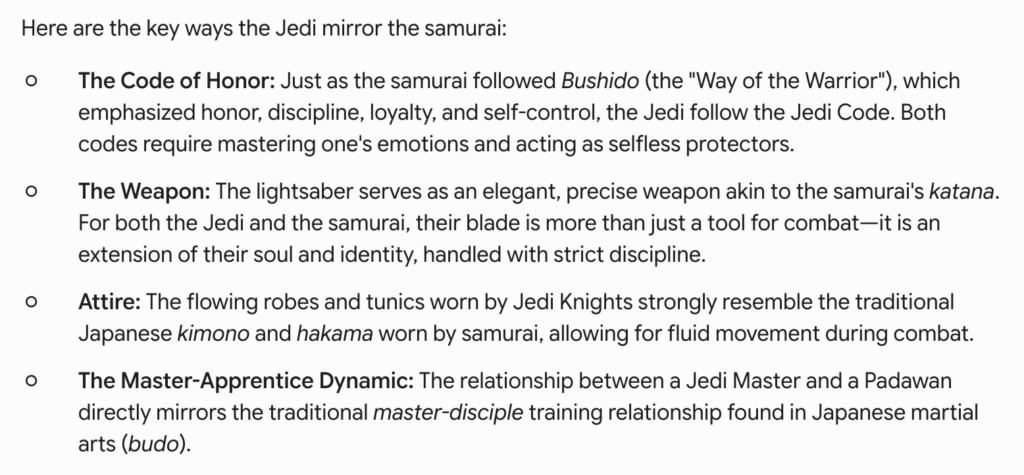
- According to Gemini:
Shogun
A recent tv series from FX.
- What do you learn from this source about Japanese culture?
- What are the values of this source to the historian?
- What are the limitations of this source?
4. What do you learn from this source about Japanese culture?
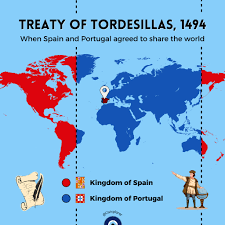
In the 1494 Treaty of Tordesillas, the world was divided into two.
To give a little context to the clip above, here is what the English character is describing.
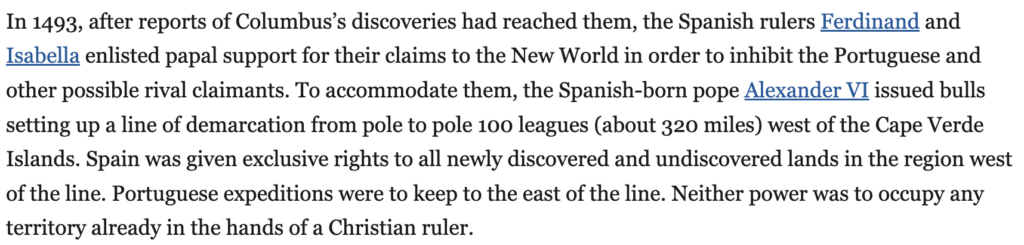
https://www.britannica.com/event/Treaty-of-Tordesillas
Perspectives of the Meiji Restoration
For the bulk of the analysis and history on this unit, I have used the following two perspectives. They are two of the leading historians on the topic.
Edwin O. Reischauer’s Japan: A Story of a Nation
His key thesis: With high literacy rates (outperforming many contemporary European nations), a growing and successful merchant class, and an effective administrative samurai (who had transitioned from being warriors), Japan had several pillars in place for an amazing revolution.
A critique of Edwin Reischauer: Perhaps he argued that Reischauer had sanitized Japanese history to suit an American audience. The Cold War was in full swing and he may have been aiming to persuade Americans that Japan was a country that was worth the effort, it had been moving towards a liberal democracy and may have done so if not for the Great Depression. However, he ignores the extreme militarism of the 1930s and the human suffering it caused…Japan was not moving towards a liberal democracy, it had authoritarian roots after all.
For the time period up to 1900, I have made notes on the book above.
Reischauer’s Chapter Summaries
Using Gemini, this is summary of the notes I made:
1. Author Overview & Historical Scope
- Edwin O. Reischauer was a Harvard professor, former U.S. Ambassador to Japan (1961–1966), and military intelligence officer during World War II with extensive academic training in Asian history.
- The document details Japan’s evolution from an isolated feudal society into a modern, unified nation-state.
2. Geography and Early Identity
- Geographical Assets & Constraints: Japan has limited natural resources, imports over 90% of its energy, and has less than one-fifth fertile soil. However, temperate weather and abundant rainfall enabled highly productive farming and early community cooperation around river irrigation.
- Isolation & Cultural Unity: Located off the Asian mainland, Japan’s natural island barriers protected it from foreign invasions, fostering a homogeneous population and strong self-awareness.
- Imperial & Cultural Origins: Early inhabitants arrived via Korea. Japan holds the world’s oldest continuous imperial line, with native spiritual roots deeply tied to nature and ancestral reverence in Shinto.
3. Adaptation of Chinese Civilizational Models
- Cultural Borrowing (6th–9th Centuries): Japan heavily emulated Sui and Tang dynasty China via Korea. It adopted Buddhism (introduced in 552 AD), Confucianism, art, architecture, and language elements.
- Selective Adaptation:
- Japan established permanent capital cities modeled after China, moving from Nara to Heian (Kyoto) in 794.
- Unlike China’s meritocratic exam system, Japan retained strict hereditary social structures and noble privileges.
- Over time, the Japanese imperial family became purely symbolic while political control decentralized.
4. The Rise of Feudalism & the Tokugawa Shogunate
- Emergence of the Samurai: Local warrior groups (bushi) gained power, leading to Minamoto no Yoritomo establishing the first military government (bakufu) or Shogunate in the late 12th century.
- Mongol Invasions: Mongol invasion attempts in 1274 and 1281 were repelled, in part due to typhoons remembered as Kamikaze (“divine wind”).
- Unification & The Tokugawa/Edo Period (1603–1867):
- After centuries of civil war among local lords (daimyo), Toyotomi Hideyoshi unified the country, followed by Tokugawa Ieyasu, who became Shogun in 1603.
- Social Hierarchy: Based on Neo-Confucian ideals, society was divided into Samurai (top 7%), Peasants, Artisans, and Merchants.
- Control & Isolation (Sakoku): The Shogun enforced alternate attendance (sankin kotai), requiring daimyo families to reside in Edo as hostages. Christianity was banned, and foreign contact was restricted almost entirely to Dutch and Chinese traders in Nagasaki.
- Late Feudal Transformation: Two centuries of peace turned samurai from battlefield warriors into urban administrators. Although merchants grew wealthy, samurai faced growing debt, eroding the feudal economic foundation. High literacy rates (~35%), urban arts (Kabuki, Haiku), and “Dutch Learning” (Rangaku) flourished.
5. Meiji Restoration & Transition to a Modern State
- Western Arrival & Internal Collapse: In 1853, U.S. Commodore Perry arrived with steamships, forcing Japan to open its ports under unequal treaties. The Shogunate’s inability to resist foreign powers led to intense discontent.
- The 1868 Restoration: Lower-ranking samurai from the Satsuma and Choshu domains overthrew the Shogunate, relocated the capital to Tokyo (Edo), and restored nominal authority to the Emperor under the Meiji era.
- Key Modernization Reforms (Fukoku Kyohei – “Rich Country, Strong Military”):
- Social & Military: Abolished social class distinctions and samurai privileges (such as wearing swords). Introduced universal military conscription (1873) and built a modern army and navy based on Western models. The 1877 Satsuma Rebellion led by Saigo was crushed by the new conscript army.
- Economic & Infrastructure: Introduced the Yen (1871), a postal network, fixed land taxes (1873), railways (1872), and banking systems. State-built industries were later sold to private financial groups (zaibatsu like Mitsubishi).
- Education & Governance: Formed the Ministry of Education (1871) for universal primary schooling, founded Tokyo University (1877), and sent missions abroad (e.g., the Iwakura Mission) to study Western governance, law, and technology.
- Constitutional System: Led by elder statesmen (genro) like Ito Hirobumi, Japan developed a conservative constitutional government influenced by European models (particularly Germany and Austria) to secure international equality and domestic stability.
Herbert Norman’s Japan’s Emergence as a Modern State
For a different point of view on the history, I did the same for this book too.
Norman’s Chapter Summaries – to be completed.
His key thesis: Norman argues that the Restoration took place because lower-class samurai joined forces (largely from areas of the country such as Satsuma and Choshu) with some of the wealthy merchants of the country to remove the Tokugawa Shogunate (or Bakufu).
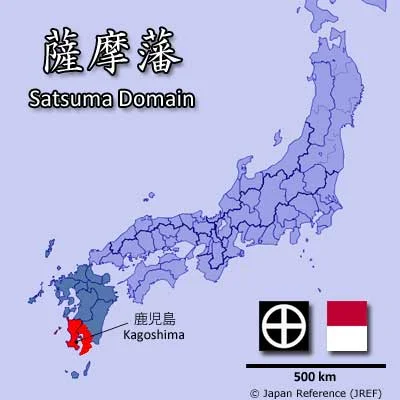
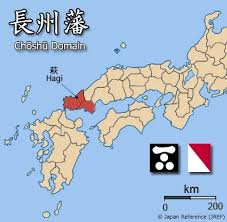
A critique of Herbert Norman: One of Norman’s arguments is that the the Tokugawa Shogunate, an elite group of samurai, was replaced by another group of samurai from different parts of the country.
If you look strictly at the personnel change in 1868, it looks like a simple elite replacement. But history is rarely just about who is wearing the hat; it is about what they do once they put it on. He ignores the total liquidation of the Japanese feudal structure and the abolition of the samurai class. The Meiji Restoration was a top-down revolution, yes, but it was a revolution nonetheless.