- Introduction
- Roles of the Meiji oligarchy and Emperor Mutsuhito.
- Land reform, industrialisation and trade.
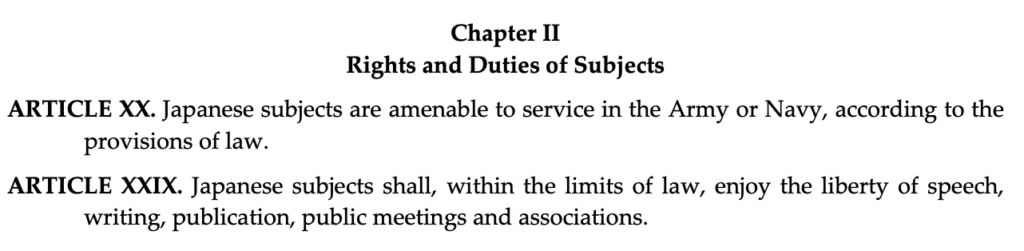
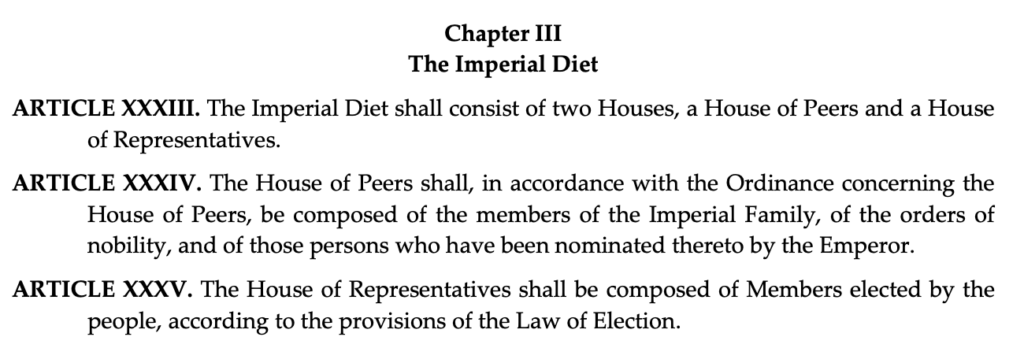
- Constitution of 1889.
Introduction
A. What do you learn from this source? List four things.
B. What is the context in which Niall Ferguson is writing in?
C. What is the context in which the Meiji Government are making decisions?
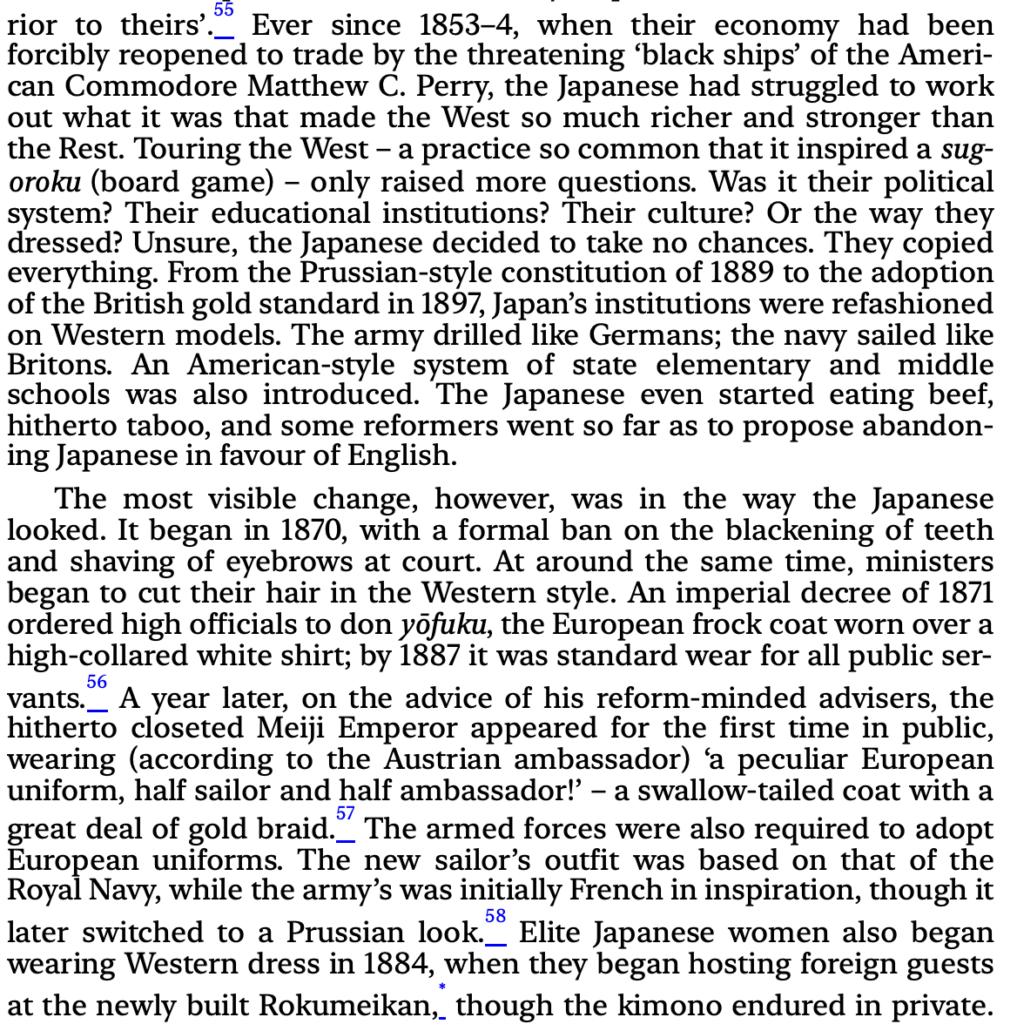
Ferguson, N. Civilization: The West and the Rest, 2011, Penguin, p. 132
Answer the following questions from the video below:
(clipped from Emperor Meiji & the Meiji Restoration Documentary :
- What happened in 1867 and why was Japan divided? 08:20-10:00
- What was the Meiji Restoration? 10:00-11:28
- What were the five changes to the Japanese government during the Meiji Restoration? 13:00-14:15
- And what happened to the capital city? 14:30-14:55
One of the five changes was the end of the feudal system and this eventually (it took until the 1880s) completely changed how people lived. Japan moved from feudal economy to one that was more market-orientated or capitalist.
Roles of the Meiji oligarchy and Emperor Mutsuhito.
Land reform, industrialisation and trade.
Roles of the Meiji oligarchy and Emperor Mutsuhito.
- In 1868 they changed the name of the year period to meiji meaning an enlightened role.
According to Edwin Reischauer:
- The central concern of the oligarchy was to protect the emperor’s prerogatives because they gave them their own authority and justification for rule, Ito saw the emperor as a spiritual force, who was both sacred and inviolable.
- The constitution was seen as a gift from the emperor on February 11 1889 and the first Diet was elected and convened in 1890.
- Some of the more conservative oligarchs had suggested scrapping the constitution entirely but as it had been introduced as a gift from the emperor this was impossible, and they would lose face from the west.
Herbert Norman agrees in that:
They wanted to ‘Revere the Emperor and expel the Barbarian.
It was difficult for the bakufu to oppose the ‘revere the emperor’ slogan.
The Restoration was an enlightened absolutism, not a liberal democracy. Only the emperor kept the people and classes together.
The Iwakura Mission
- What was the Iwakura Mission? 15:50-17:28
- What did they learn and what was achieved? 17:28-20:02
- Do all agree that the Meiji Restoration improved Japan? 21:00-22:00
- How did the Japanese military grow in size? 22:00-25:29
- What was the Meiji government’s policy towards Korea? 25:30-28:00
Land reform, industrialisation and trade.
1873 Land tax Reform
State Financing and Early Industrial Accumulation: Revenue generated from the standardized land tax served as the primary source of state capital needed to fund rapid industrialization, construct modern infrastructure, and build defense forces.
1876 Samurai stipends abolished
1882 Bank of Japan, designed along the German model
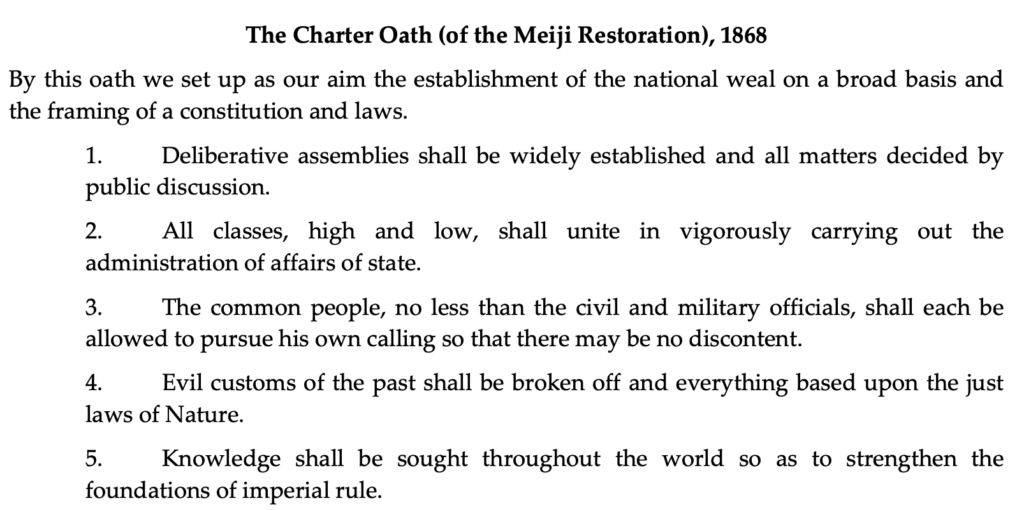

- What do you think are the ‘evil customs of the past’?
- What are the values of this document in learning about how the Japanese saw their future?
- What are the limitations?
Constitution of 1889.
Diet – a legal assembly.