
- Alliances
- Ideologies and Strategic Interests
- 1946 – Capitalism V Communism, Stalin hostile speech – communism & capitalism were incompatible
- 1946 – The Iron Curtain Speech
- 1947 – Truman Doctrine
- 1947 – Marshall Plan
- 1947 – Czechoslovakia
- Flashpoint Berlin
- 1948 – Berlin Blockade
- 1948 – Berlin Airlift
- NATO and the Soviet Bomb
- Who to blame?
Alliances
- During the Second World War, the Soviet Union and the United States of America were allied. The only reason for this was that they shared a common enemy, Germany. However, both countries had different reasons for fighting the Second World War. The Soviet Union was attacked by Germany in 1941, despite previously being allied – see Nazi-Soviet Pact. Germany also declared war on the USA in December 1941, shortly after the attack on Pearl Harbor.
- One could argue that the Soviet Union was already fighting the Second World War in 1939 as it attacked Poland and later Finland.
To learn about the following conferences, watch this documentary:
Tehran Conference (December 1943)
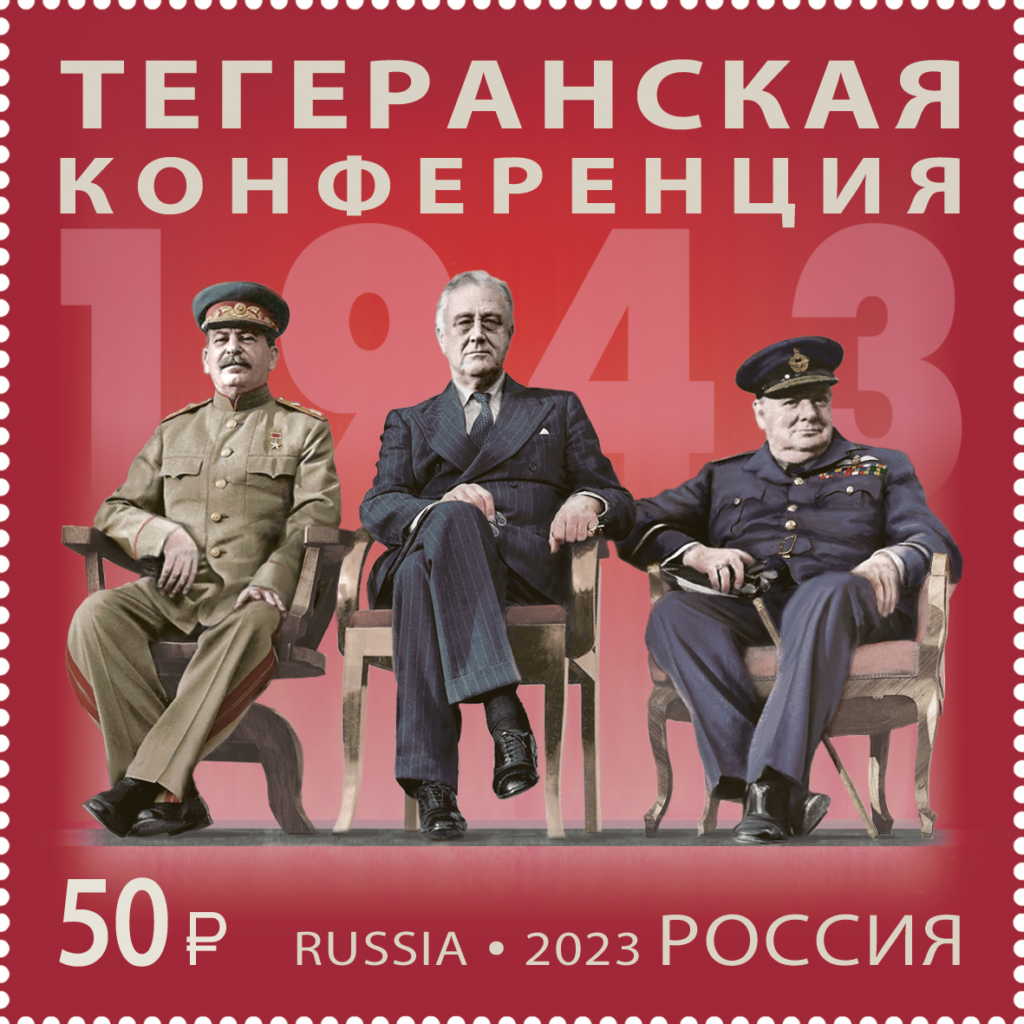
- Tehran in Iran was chosen for its location because it was relatively safe for all three Allied leaders (Stalin, Roosevelt and Churchill).
- Among the key points to discuss at Tehran was how to win the war against both Germany and Japan, and what should happen to the former after the war had ended.
- Watch the documentary CNN Cold War – Comrades and answer the following questions.
23:30 – 24:07 Is the alliance between the US and Soviet Union strong?
24:10 – 24:40 What was the Katyn Massacre? How did Germany try to use this massacre?
27:02 – 27:38 What does George Kennan say about Stalin and Roosevelt?
27:38 – 27:55 What did the allies agree to at Tehran?
1943 to 1945
- Watch the documentary CNN Cold War – Comrades and answer the following questions.
28:56 – 30:15 What happened to Poland and who was to blame?
30:27 – 31:04 What did Churchill and Stalin agree to?
Yalta Conference (February 1945)
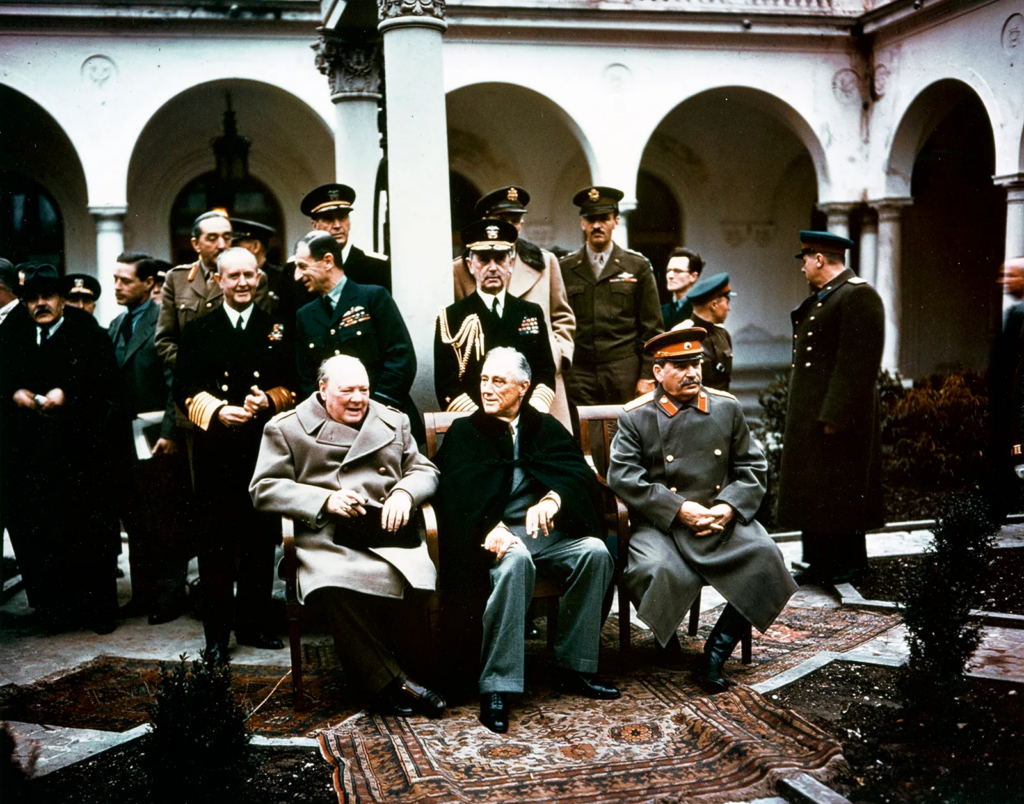
- The Yalta Conference aimed to discuss how to defeat and later administer Germany, what Europe would look like after the war and how the Soviet Union would later join the war against Japan.
- Watch the documentary CNN Cold War – Comrades and answer the following questions.
32:50 – 33:31 What terrible mistake did Roosevelt make and what were the two key topics which were being discussed?
34:25 – 34:50 What was decided at Yalta?
35:20 – 36:24 What happened in April 1945 and how do you think this affected the alliance of the Big Three?
- An interesting view of the Yalta Conference from US president Nixon in 1983 (he had stepped down from power in 1974). Why was Yalta a failure?
Potsdam Conference (July 1945)
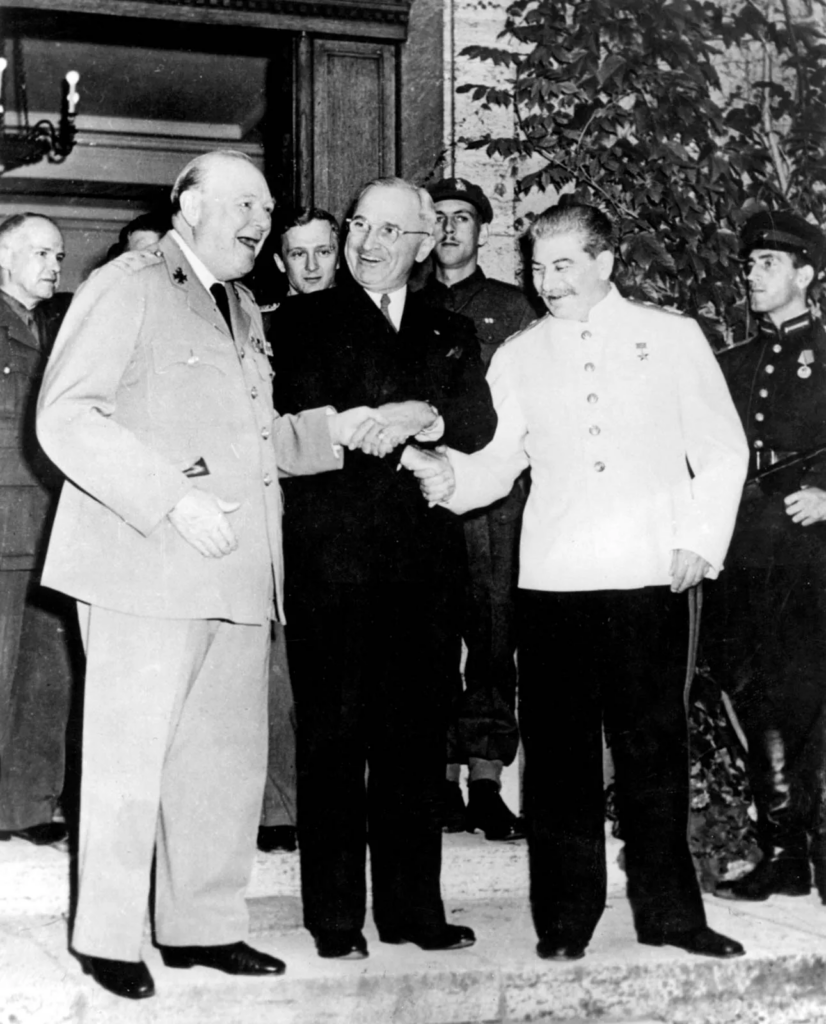

- The Second World War was won in Europe, Germany surrendered on 9th May 1945. The Potsdam Conference aimed to further discuss the issue of a defeated Germany and, perhaps more importantly, how to solve the sovereignty issues in eastern Europe (particularly Poland) and how to defeat Japan.
- Watch the documentary CNN Cold War – Comrades and answer the following questions.
42:20 – 43:00 Where is Potsdam and how had the US view of the Soviets changed since Yalta?
43:30 – 45:05 Which two events may have fractured the relationships between the Big Three? But what was agreed at the conference?
- One of the key issues that worsened the relationship between the Big Three was how the Soviet Union had taken the initiative to extract reparations from Germany. These included buildings, materials and even people. They had raised it at Yalta but there was no agreement…but the Soviets did it anyway.
- There are two ways of looking at this. One, they must act only in agreement with both the US and UK. Any aggressive move such as this will only ruin any trust that had developed during the war against Germany. Second, the Soviet Union had suffered more than any country in the Second World War, their economy was ruined in western Russia and tens of millions had died. So taking reparations from Germany was the quickest way of solving some of their problems.
Summary
Taken from Perplexity.ai

Ideologies and Strategic Interests
Capitalism V Communism
- Are capitalism and communism compatible? Like most things in life, there is not a simple answer!
- There have been examples of a communist and capitalist countries working together (contemporary China for example). But there was a fear before and after the Second World War that this was no possible, and that one may not be able to exist with the other.
- The Soviet Union:
- Believed in Marxism, or at least the leader’s interpretation of it. This argued that the bourgeoisie (middle-class) exploited the proletariat (workers) in a capitalist country. To prevent this, all resources should be owned and controlled by the state. The rulers of this country would be the workers, who would deliver equity to the people.
- But in reality, Stalin ruled as a brutal dictator, using fear to make some of his policies successful. There were few human rights and the economy was not developed sufficiently to give the people the Marxist utopia they were promised.
- The USA:
- Believed in capitalism and democracy. A private individual could own land and property and make profit as a result. The competition between these individuals would continue to grow the economy. The government could be voted out of office if the people were not satisfied so there was an effective social contract. There was also freedom of speech.
- But in reality, workers, particularly in the 1930s, did not prosper and there was inequality in the economy. Moreover, some minorities were not allowed to vote, black and Asian people for example.
1. Who were the two main leaders representing opposing ideologies at the start of the Cold War? 0:07
2. What are the core beliefs of the United States’ ideology during the Cold War?0:07 – 1:37
3. What economic system did the United States support, and how does it function? 1:25 – 2:32
4. What were some criticisms of capitalism mentioned in the video?2:19 – 2:52
5. How did the Soviet Union’s economic system differ from the U.S., and how was it managed? 2:52 – 3:16
6. What were the strengths and weaknesses of the Soviet socialist economy? 3:00 – 3:36
7. How did political representation differ between the U.S. and the USSR? 3:30 – 4:35
8. What was the Soviet concept of democracy according to Marxist theory? 4:21 – 4:50
9. How did the two superpowers differ in their approaches to trade and economic self-sufficiency? 5:30 – 6:40
10. What contrasting views did the U.S. and USSR have about citizen rights and government responsibilities? 7:35 – 8:45
Stalin’s 1946 Speech
- This speech (some excerpts are below), by Josef Stalin, was given in February 1946. According to western perspectives at the time, and possibly even now, it was aggressive towards capitalism. However, the Soviets disagree, only stating that Stalin was explaining how inevitable conflict was between capitalist countries.


Flashpoint Berlin
- The Big Three first discussed the idea of splitting Germany into four zones at Tehran. The UK, US, Soviet Union and France would each administer a zone until they were satisfied that the country was no longer a threat. Berlin was to be located in the Soviet zone although this was to be split into four too.
- However, the allies had different views on what should happen to Germany.
- The Soviet Union wanted Germany punished so it would never be able to threaten her borders again. Their history (1812, 1914, 1919 and 1941) had seen invasions from the west and now was an opportunity to stop this occurring in the future. Quite simply, it wanted revenge too!
- The US wanted Germany to be reduced industrially so that it could not wage war again in the future. But democracy and education, and the exclusion of any Nazis from public office, should be used to rebuild the country.
- The UK wanted Germany punished but not to the same degree of 1919.
- France was ambivalent, she knew that Germany would be weakened and did not really care how much as long as it was no longer a threat.
- At no point during the Second World War did the Big Three want Germany split into two. However, as the relationship soured between them, it seemed the more likely outcome after 1945.
Who was to blame?
- The Soviet Union caused the Cold War because…
See Soviet Psyche to understand why the following map is so important to the Soviet Union.

- So Napoleon’s France in 1812 and Kaiser Wilhelm’s Germany in 1914 both invaded Russia through the North European Plains. Hitler then did the same in 1941. How could Stalin prevent such an attack again? One solution was to establish a buffer zone in eastern Europe. If there was to be a future European war, it would be fought on foreign land, not Russian!
- The establishment of the buffer zone would be an aggressive move by Stalin and the Soviet Union. The eastern European countries would not just accept being ruled by Stalin. This expansion caused a backlash by the western powers, fearful of Soviet communism infiltrating their own populations. The promises made at Yalta and Potsdam, especially with regards to Poland, were abandoned as the pre-war government (which had been in exiled in London) was ignored and a Soviet-backed government was put in place by 1945.