
See also Causes of the Second World War
The Great Man Theory
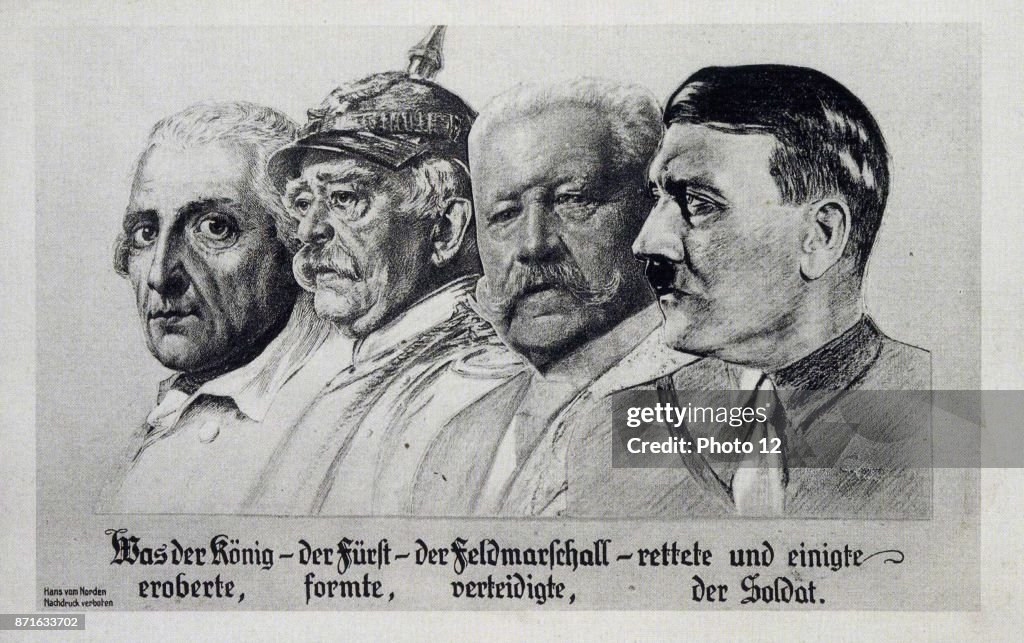
From left to right: Frederick the Great, Chancellor Bismarck, President Hindenburg and the Führer. Was Hitler just continuing the German psyche of a strong man making the country more powerful?
According to many Germans after the First World War, particularly those on the right such as conservatives, the country was unfairly punished for causing the conflict. See Treaty of Versailles.
Reevaluating History
The common view is that Hitler war largely responsible for causing the Second World War in Europe. This ‘historian’ disagrees…
Darryl Cooper’s interview lit an academic fuse at the time. Other historians appeared in the media to disagree with him.
Especially as Churchill is seen by many in Britain as one of their greatest people…

Hitler’s Foreign Policies
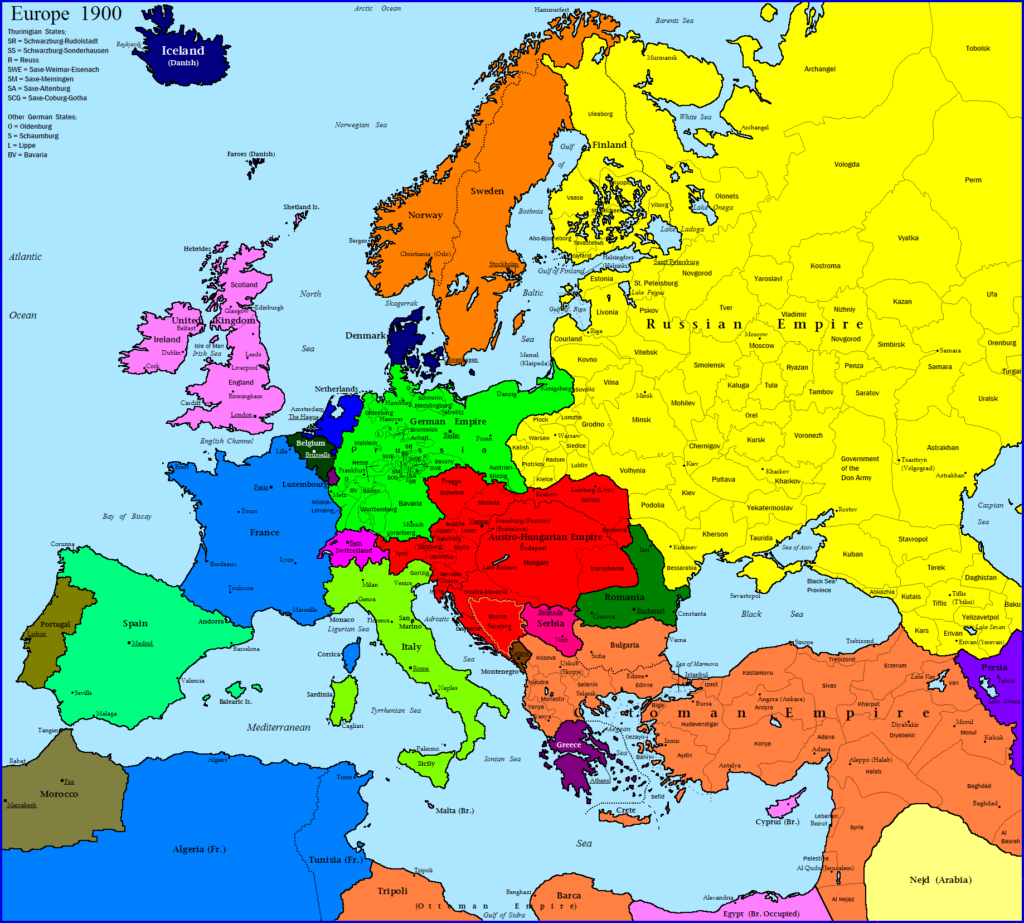

Note: this is not my resource, it is only borrowed.
Dominic Sandbrook and Tom Holland, in the podcast series ‘The Rest is History’ argue that Hitler was an opportunist with his foreign policy. They give the following examples:
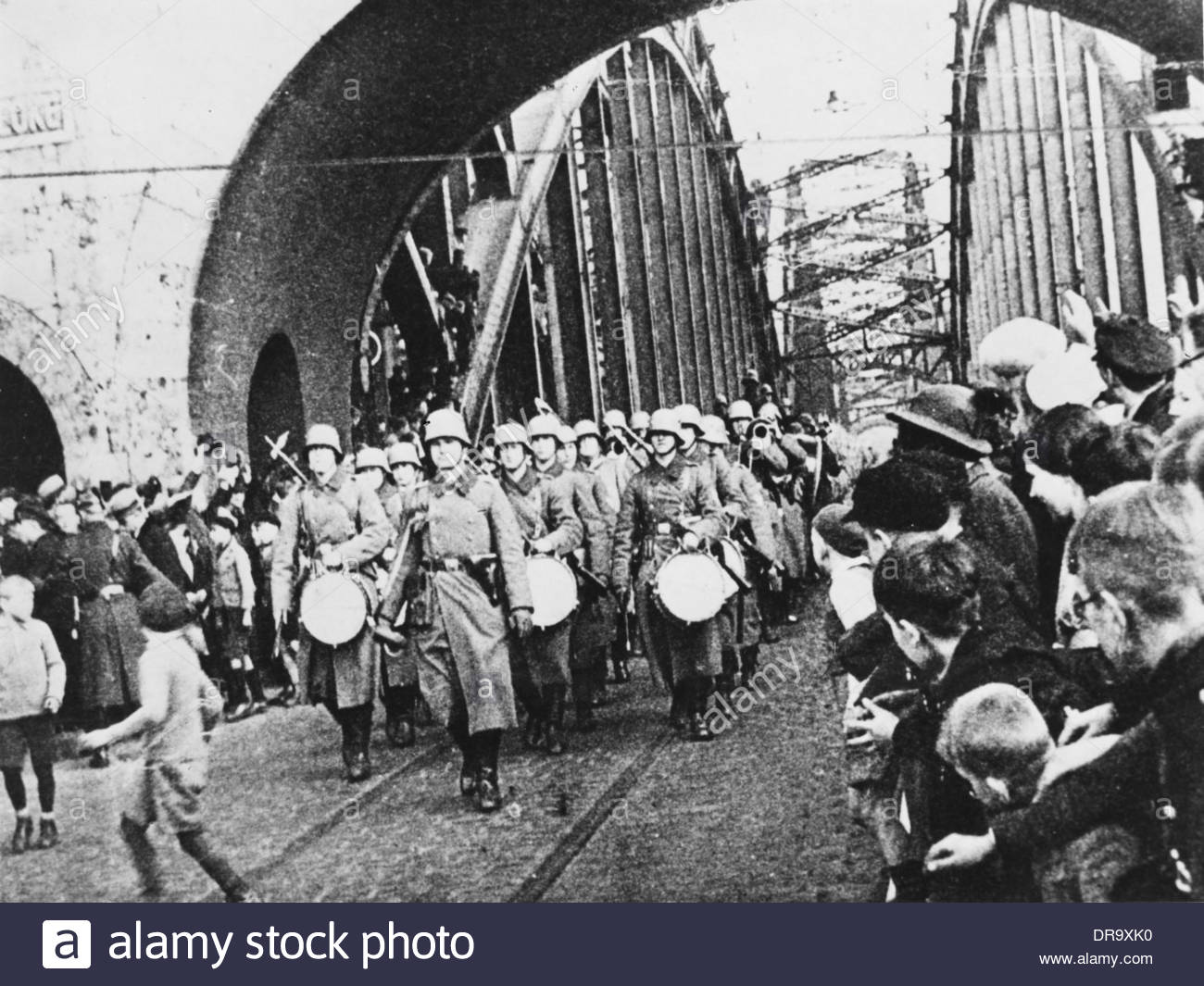
- Germany signed a naval agreement with Britain in 1935, this showed that the Stresa Front was no as united as it seemed against Hitler. Importantly, although the idea was largely Hitler’s, the signing of this was not part of a grand strategic plan. After Britain signed it, Hitler realised that now was the time to remilitarise the Rhineland. Britain was clearly not interested in mainland Europe and, although high-risk (even some of Hitler’s military commanders were unsure of the move) German forces moved in to the Rhineland on March 7 1936. The move was condemned by both France and Britain but no military action was forthcoming. Hitler had won! He was now incredibly popular in Germany, further maintaining his position as Fuhrer, and a future European war was more likely.
Did Hitler know what he was doing?
Treaty of Versailles
Hitler and Rearmament
AJP Taylor argues that Hitler did not conduct an aggressive rearmament policy.
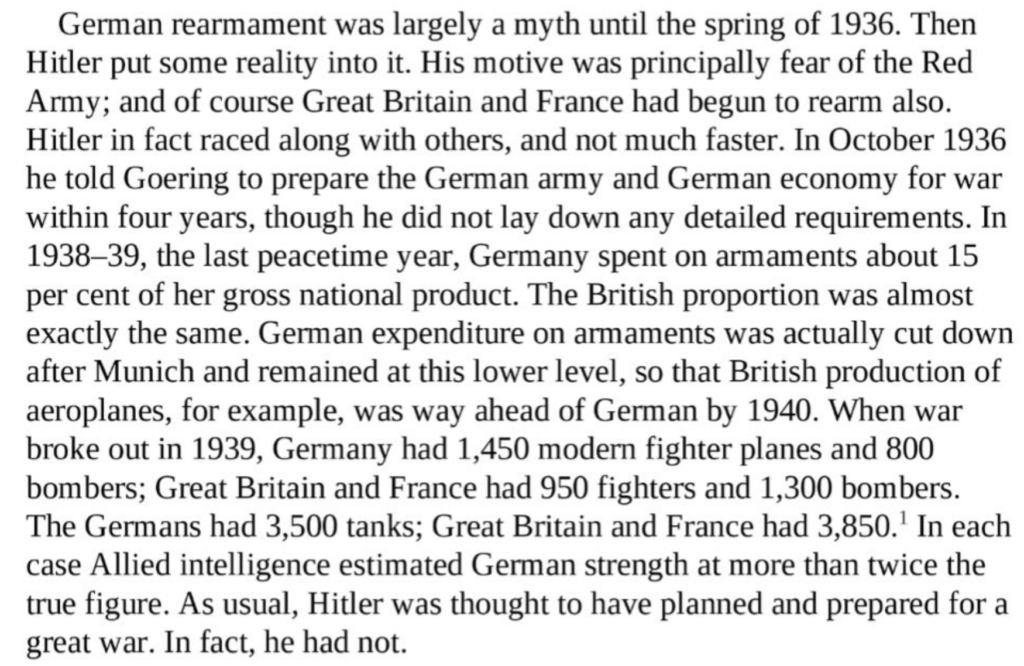
But…
Rhineland, 1936
The Munich Agreement
- A key argument with the policy of appeasement is that it bought time for the British Government. The country needed to rearm quickly and was not in a position to fight Germany in 1938. Does this source, taken from the May 2023 Paper One, indicate this?

Nazi-Soviet Pact, 1939
Listen to the podcast (Rest is History) from the beginning to 21 minutes and answer the following questions.
Joachim von Ribbentrop

- Why was the pact called ‘Faustian’?
- What was the Nazi-Soviet Pact? This is also answered from 17 minutes onwards
- When was it signed?
- What were the reasons why Hitler signed the Pact? These are explained throughout the podcast.
- What were the reasons why Stalin signed the Pact? Why did Stalin not trust the British and French?
- Which country reached out first?
- Describe the relationship between Germany and the Soviet Union before 1939.
- What effect did the Polish Guarantee have on Hitler and Stalin?
- Where did the Soviets get their Nazi flags for von Ribbentrop’s visit?
- What else did Stalin do to improve the chances of the deal with Germany being agreed?
- How does Russia view the Nazi-Soviet Pact today? When does the Second World War in the Soviet Union begin?
AJP Taylor argued in Origins of the Second World War that Britain and France were also to blame for the war as they tried to engineer a conflict between Germany and the Soviet Union. Britain could have made an alliance or a deal with Stalin but chose not to, this only encouraged Hitler’s aggression. Listen from 21.00 to 24.00 and list the reasons why.
Opposing View
British, French Foreign Policy and Appeasement, 1936-39
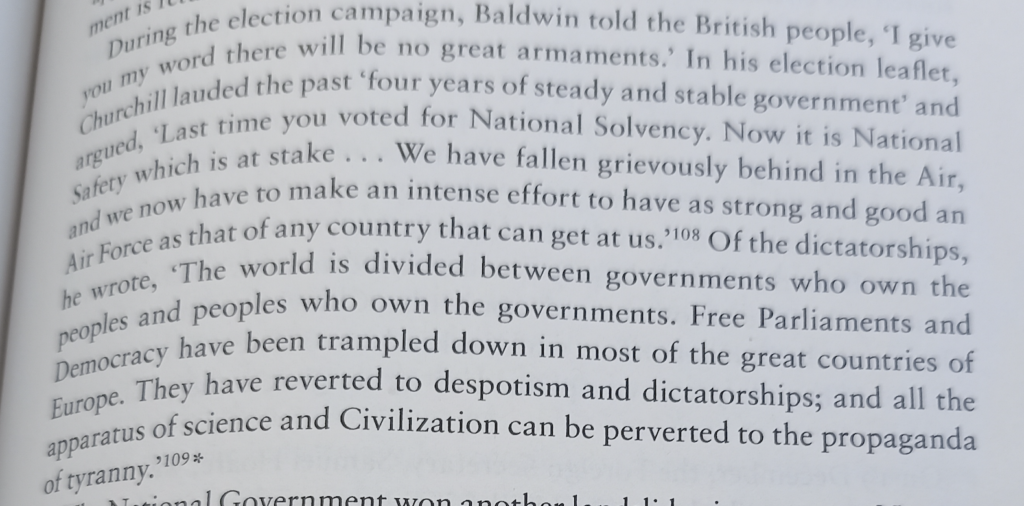
Winston Churchill, Prime Minister of Britain in 1940, criticised the British governments of the 1930s because they did not rearm sufficiently. From Andrew Robert’s Churchill, (page 393, 2018).
Political Polarisation
Perspectives and Historiography
General Resources
- (0:18) How is the destruction of the French village Oradour-sur-Glane described?
- (1:30) How is the village portrayed as a symbol for others during the war?
- (2:50) What were the political and economic conditions in Germany around 1933?
- (4:00) How did German society initially react to the Nazis coming to power?
- (6:00) What was the significance of Hitler being appointed Chancellor?
- (7:20) How did the Reichstag fire impact German political freedoms?
- (9:00) What actions did Hitler take to consolidate total power by March 1933?
- (11:30) What was the role of the SA (Storm Troopers) and SS in Nazi control?
- (13:20) How did Nazi policies affect Jewish citizens initially?
- (15:00) What cultural changes did the Nazis enforce in Germany?
- (16:30) How did the Nazis use book burnings as propaganda?
- (18:00) What was the impact of the Nazi anti-Semitic campaigns on intellectuals?
- (20:00) What groups in German society supported the Nazis and why?
- (24:50) How did Hitler address the economic devastation ’caused’ by the Treaty of Versailles?
- (27:00) What was Germany’s reaction to regaining the Saar territory?
- (28:50) What was the significance of the remilitarization of the Rhineland?
- (31:10) How did Hitler’s early foreign policy successes affect European politics?
- (31:10) What was the significance of Germany regaining the Saar territory under international supervision?
- (32:20) How did the remilitarization of the Rhineland in 1936 challenge the Treaty of Versailles?
- (33:40) What was the reaction in Germany and Europe to the German troops crossing the Rhine?
- (35:00) How did the remilitarization of the Rhineland affect France’s and Britain’s position in Europe?
- (37:15) What role did Hitler’s speech and propaganda play in gaining popular support during these territorial recoveries?
- (39:00) What challenges did the German military face in preparation for these aggressive moves?
- (41:10) How did the Nazi Party consolidate power after the reoccupation of the Rhineland?
- (43:00) What was the significance of Austria’s annexation by Germany (Anschluss)?
- (45:20) How did Germany’s aggressive moves affect neighboring countries like Czechoslovakia and Poland?
- (50:00) What was the importance of the Munich Agreement, and how did it influence the course toward war?